How to Prepare for Sem End Exams with a Question Bank
Semester end exams usually fail students in the same way: too much material, too little prioritization. A question bank helps only when it is tied to your syllabus and notes. Otherwise it becomes one more pile of content you do not finish.

Key takeaways
- Use a question bank to organize revision, not replace understanding.
- Split sem end preparation into high-probability, medium-priority, and backup units.
- Practice long-form questions only after you know the likely topic map.
Build your sem end exam plan around coverage, not panic
The first job in sem end preparation is not solving questions. It is understanding how much of the syllabus is realistically covered in your notes and revision time.
Mark units that are already familiar, units that need selective revision, and units that require fast reconstruction from scratch. This gives your question bank context.
- Green units: already studied and ready for practice.
- Yellow units: understood but need better answer structure.
- Red units: weak coverage and should be simplified fast.
Choose question-bank practice by marks and topic weight
Sem end exams are often marks-based. That means 2-mark, 5-mark, and 10-mark preparation should not be mixed blindly. Some topics are definition-heavy, while others demand process explanation, derivation, or comparison.
A useful question bank groups questions by marks pattern and unit priority so you can practice the exact answer depth the paper expects.
- Use short-answer questions for rapid recall and last-day revision.
- Use 5-mark questions to test structure and concept clarity.
- Use 10-mark questions to build full-answer stamina for high-weight units.
Revise from mistakes, not from random repetition
Many students keep reading the same notes because it feels productive. Better sem end preparation comes from practice, error review, and selective note repair.
After each question session, document where you got stuck. Was the issue missing content, weak answer structure, or lack of recall? Your next revision block should target that exact problem.
- Keep a one-page error sheet for every subject.
- Turn repeated mistakes into flashcards or short revision prompts.
- Re-practice only the units connected to those mistakes.
Frequently asked questions
Is a question bank enough for sem end exams?
A question bank is strongest when it is built from your notes and syllabus. On its own, it is useful for practice, but it works best as the second step after topic prioritization.
How many sem end questions should I practice per unit?
Aim for a small but high-quality set: a few short-answer questions, one or two medium-length questions, and at least one long-answer question from each priority unit.
Want Eleventh Hour to build a prediction report from your notes?
Join the beta waitlist to get early access to note-based exam prediction, detailed revision reports, and targeted question banks built for university students.
Join the beta waitlistRelated articles
Keep building your exam preparation system with these next reads.

How to Study for Internals Using Your Notes and Syllabus
Internal exams are easier to manage when you study from your own notes, map them to the syllabus, and revise in the right order.
Read article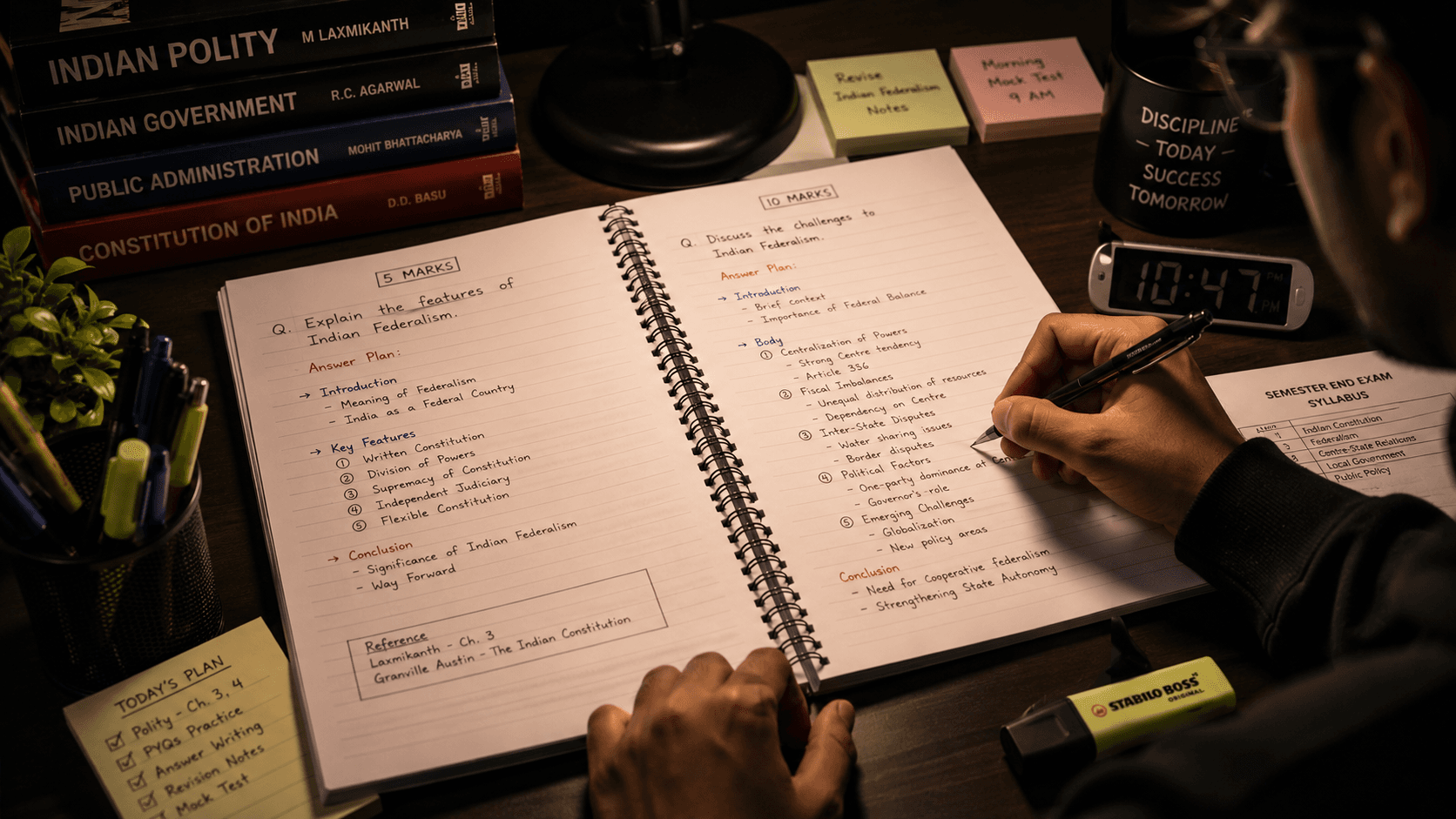
5-Mark vs 10-Mark Questions: How University Students Should Prepare
If you answer 5-mark and 10-mark questions with the same preparation style, you usually lose marks. The answer depth is different, and your revision should reflect that.
Read article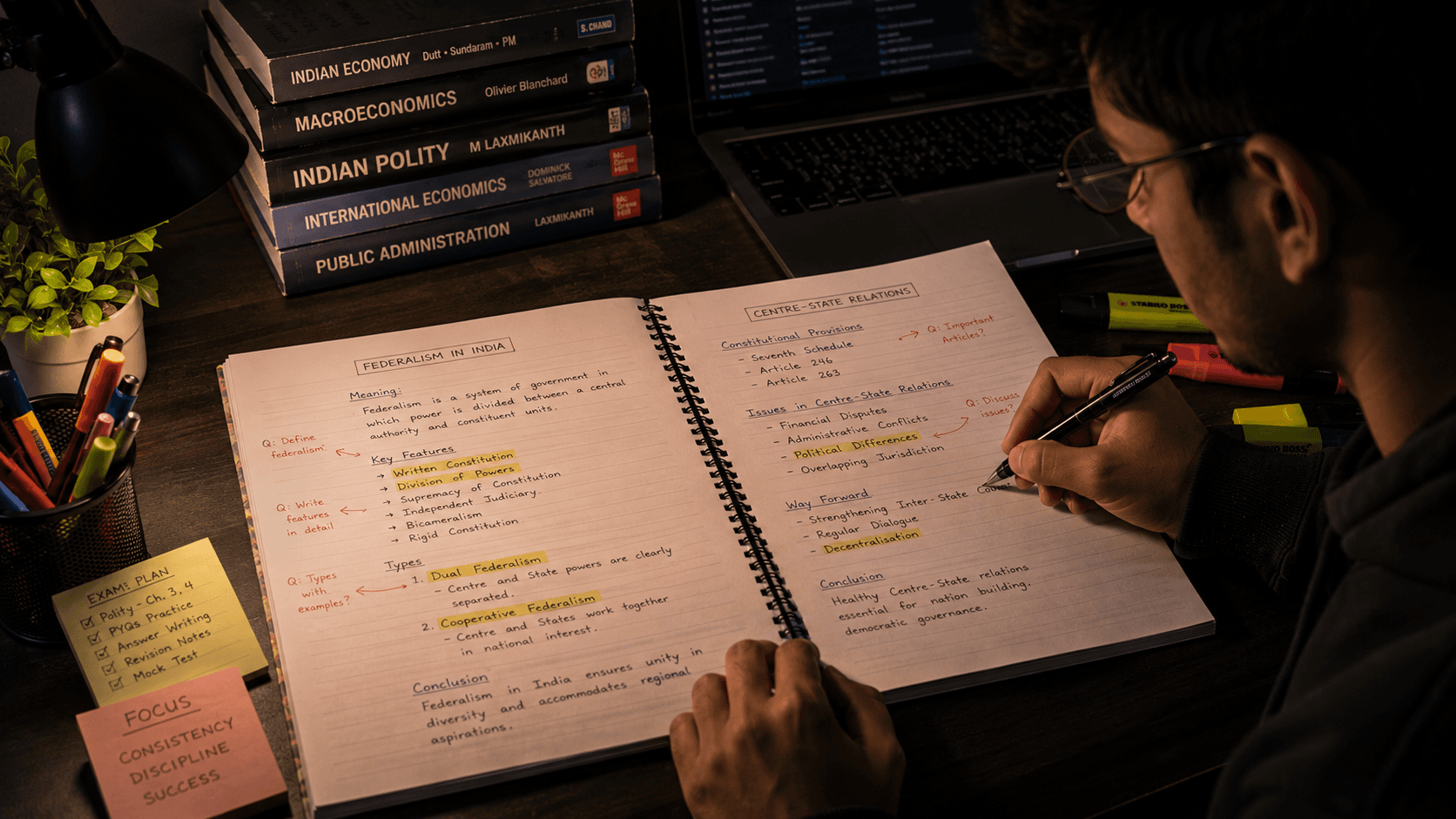
How to Find Important Questions from Class Notes
The easiest way to find important questions is to read your notes for signals, not just information. Repetition, emphasis, and structure usually tell you where marks come from.
Read article