A 7-Day Last-Minute Exam Plan for College Students
A one-week exam plan only works if it is aggressive about priorities. You cannot revise everything equally. The goal is to cover high-signal topics, practice the most likely questions, and avoid spending two hours making a study schedule that never gets used.
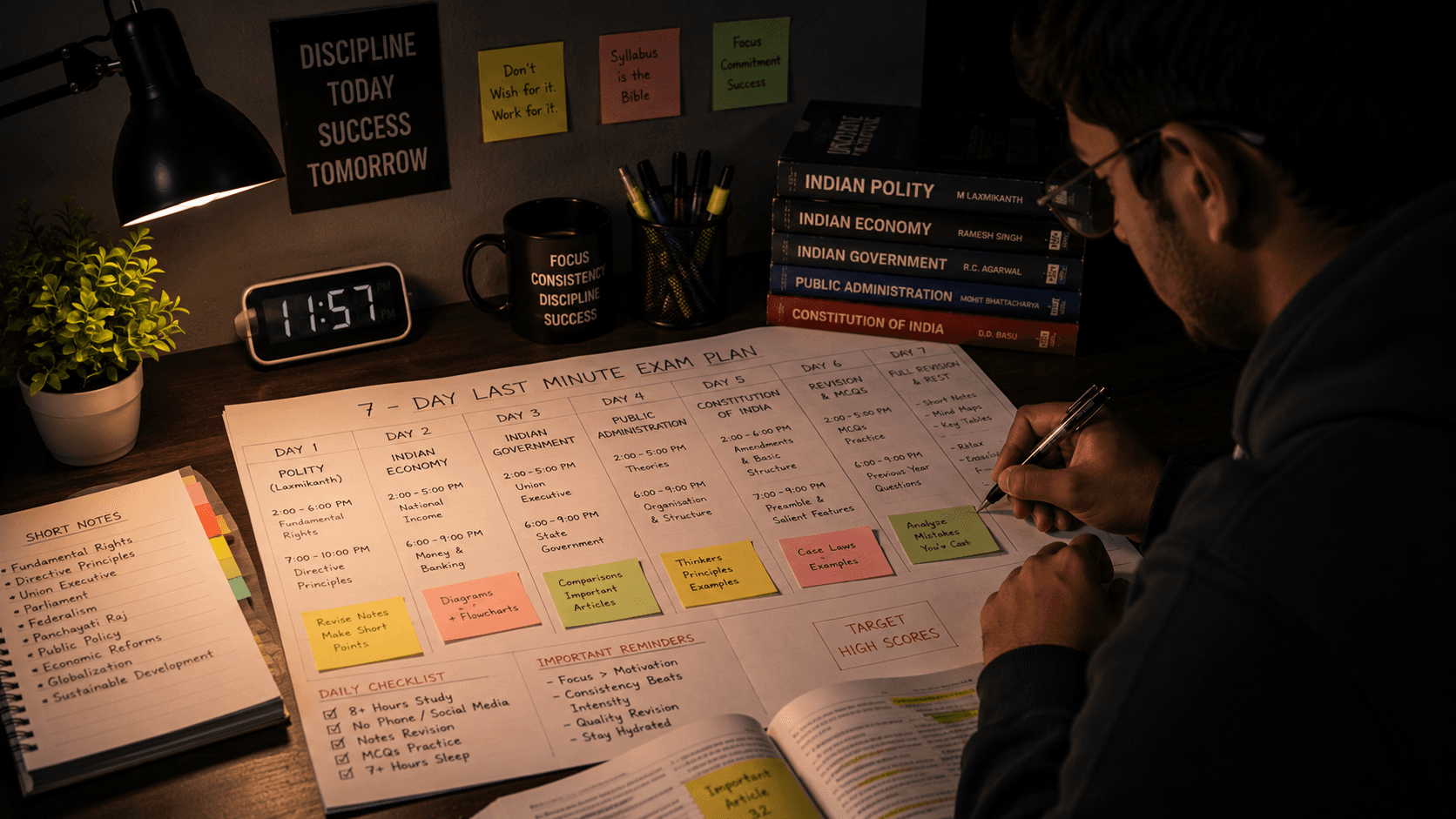
Key takeaways
- Short timelines demand ruthless prioritization.
- Every day should produce visible output such as practiced answers or marked question sets.
- Sleep, breaks, and review cycles matter because recall drops fast under panic.
Days 1 and 2: build the short list
The first two days should be about note cleanup, syllabus alignment, and question identification. Do not try to master everything immediately.
Your only goal is to produce a ranked revision list that you can actually finish in five more days.
- Collect notes and mark missing areas.
- Create A-list and B-list topics.
- Generate likely short, medium, and long questions from priority units.
Days 3 to 5: practice before you feel ready
Waiting to feel fully prepared wastes the middle of the week. Start practicing as soon as the short list is ready. This reveals weak areas much faster than rereading ever will.
Use timed blocks. One recall block, one answer-writing block, and one error-review block is a strong daily rhythm.
- Begin every session with a quick recall test.
- Write at least one full answer every day.
- Review only the mistakes you made, not the entire subject again.
Days 6 and 7: compress and stabilize
The final two days are for compression. Shrink large notes into answer frameworks, formula sheets, diagrams, and ranked important questions.
Do not keep opening new material unless it fixes a critical gap. Stability beats novelty in the final stretch.
- Revise only the A-list and the errors list.
- Practice short recall rounds from memory.
- Sleep properly before the exam day instead of pushing one more low-quality session.
Frequently asked questions
Can I still score well if I start one week before the exam?
Yes, if you compress intelligently and focus on likely-question zones. The key is to stop pretending you can study everything equally in seven days.
Should I spend the last day solving more questions or revising notes?
Usually the last day should focus on compressed revision material, recall checks, and only a few targeted question practices. Heavy new practice can create unnecessary stress.
Want Eleventh Hour to build a prediction report from your notes?
Join the beta waitlist to get early access to note-based exam prediction, detailed revision reports, and targeted question banks built for university students.
Join the beta waitlistRelated articles
Keep building your exam preparation system with these next reads.

How to Study for Internals Using Your Notes and Syllabus
Internal exams are easier to manage when you study from your own notes, map them to the syllabus, and revise in the right order.
Read article
How to Prepare for Sem End Exams with a Question Bank
Sem end exams feel bigger because they cover more, but a well-structured question bank can turn full-sem chaos into a revision plan you can actually finish.
Read article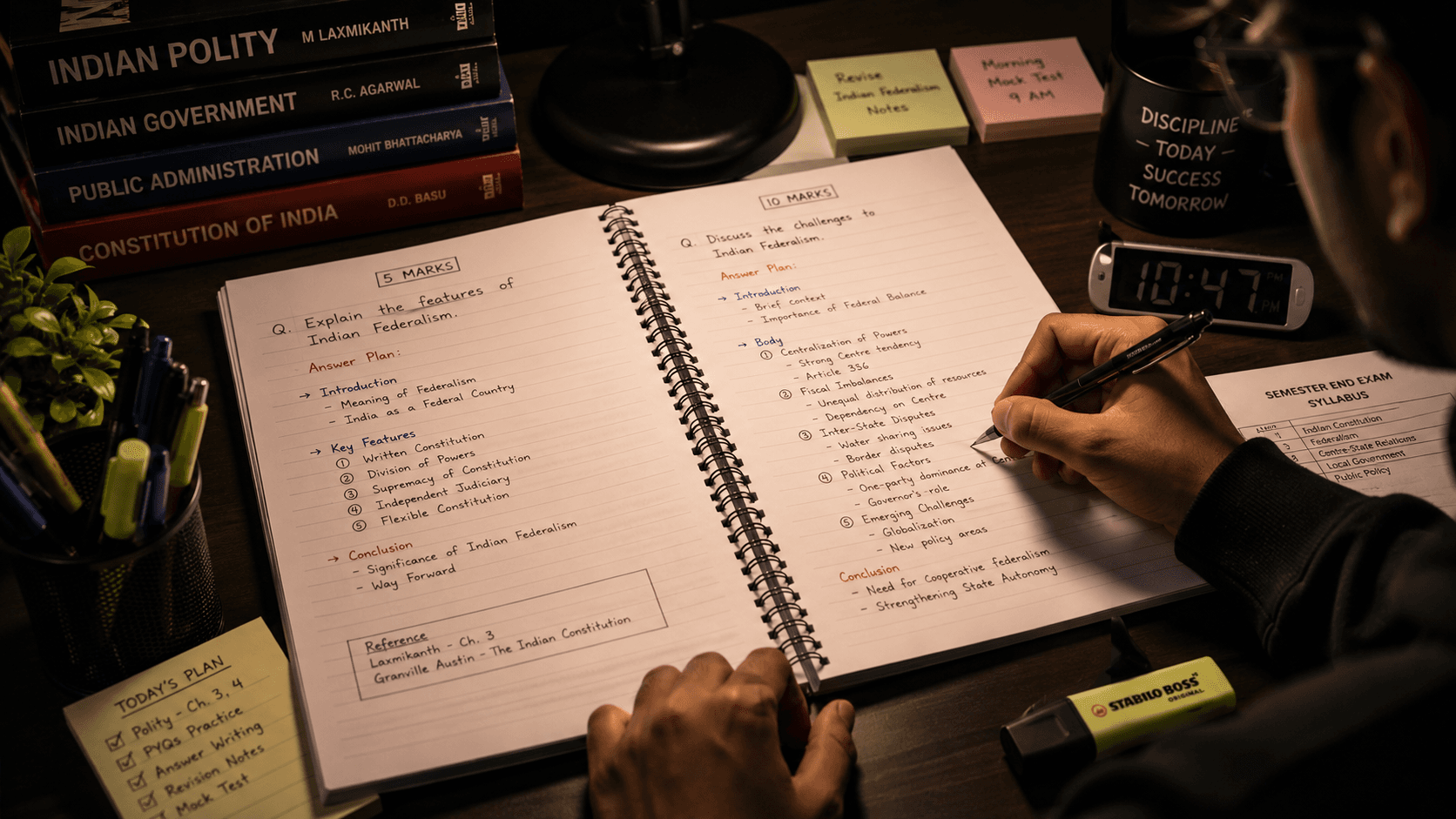
5-Mark vs 10-Mark Questions: How University Students Should Prepare
If you answer 5-mark and 10-mark questions with the same preparation style, you usually lose marks. The answer depth is different, and your revision should reflect that.
Read article