How to Score Above 80% in University Exams with Active Recall
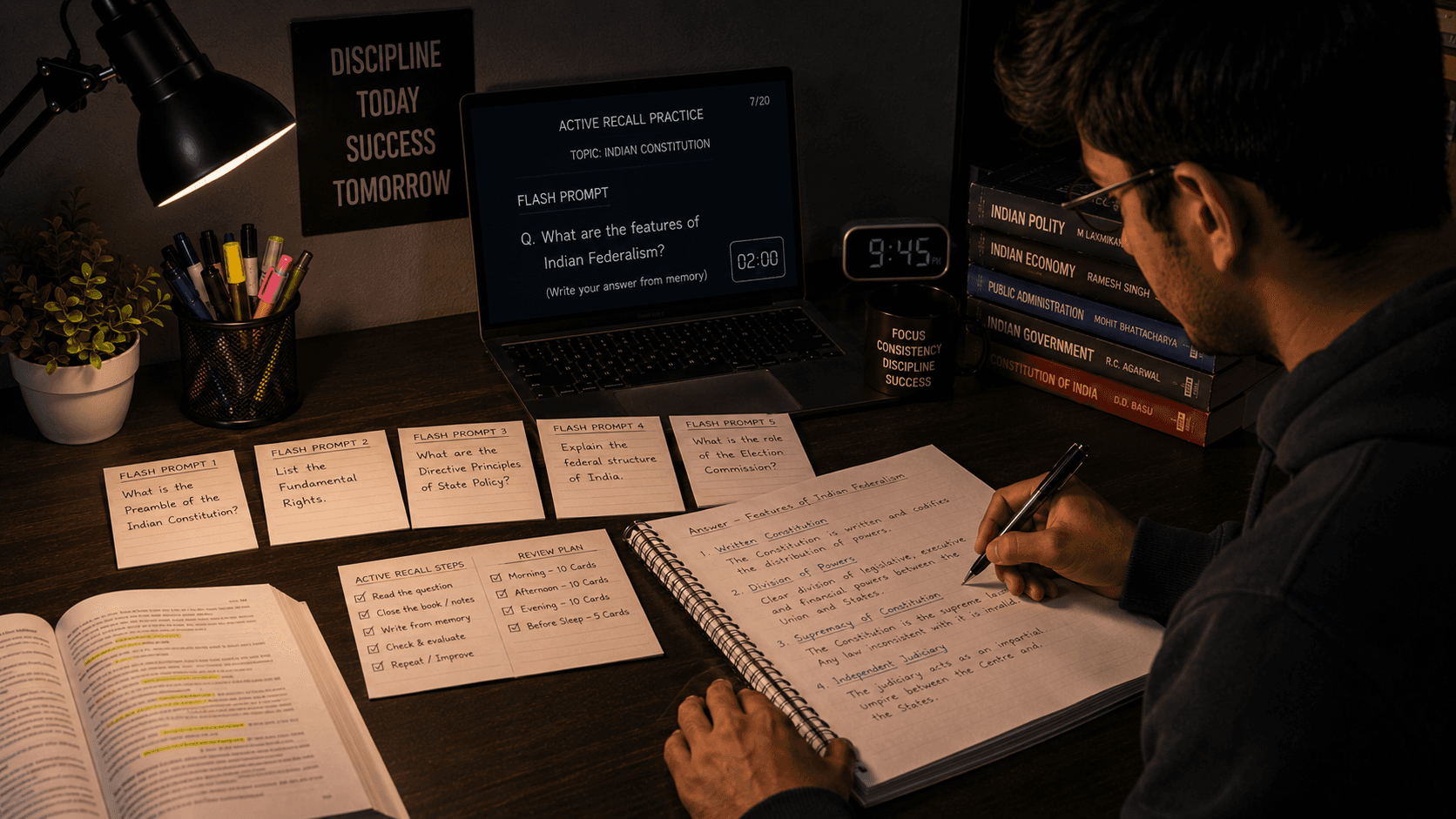
Students who score consistently well do not always study longer. They retrieve information more often. Active recall forces the brain to produce an answer instead of merely recognizing content on a page, which is why it usually improves exam readiness faster than passive revision.
Key takeaways
- High scores usually come from retrieval practice, not repeated reading.
- Active recall works best when it is matched to actual exam question types.
- A question bank becomes much more powerful when used for recall cycles instead of one-time practice.
Why active recall works better than rereading
Rereading makes material feel familiar, but familiarity is not the same as exam recall. Active recall creates productive discomfort, and that discomfort is usually a sign that real learning is happening.
When you answer questions without looking at notes first, you expose the exact concepts that need more work.
- Use flash prompts for definitions and formulas.
- Use short-answer questions for concept explanation.
- Use long-form questions for answer structure and endurance.
How to use active recall with your notes
The easiest method is to convert note headings into questions. Cover the answer, speak or write what you remember, then compare with the notes and repair only what you missed.
This works even better when your notes have already been filtered by likely topics, syllabus weightage, and question pattern.
- Turn each heading into one question before revision starts.
- Keep recall rounds short and repeated instead of very long and exhausting.
- Track weak prompts and return to them on the next day.
How active recall supports an 80%+ scoring target
Students aiming above 80% need coverage and answer quality. Active recall supports both because it improves memory accuracy and reveals where structure is missing.
This is one reason targeted question-bank practice matters. It gives active recall a direction instead of making you guess what to test yourself on.
- Practice likely questions before the exam instead of random ones.
- Use timed recall to improve speed under marks pressure.
- Review only the weak parts after each recall cycle.
Frequently asked questions
How many active recall sessions should I do in a day?
A few short high-quality sessions are usually better than one long session. Two to four focused recall blocks can be very effective when paired with review.
Does active recall work for theory subjects too?
Yes. For theory subjects, active recall can use definitions, comparisons, process explanations, essay frameworks, and likely long-answer prompts.
Want Eleventh Hour to build a prediction report from your notes?
Join the beta waitlist to get early access to note-based exam prediction, detailed revision reports, and targeted question banks built for university students.
Join the beta waitlistRelated articles
Keep building your exam preparation system with these next reads.

How to Study for Internals Using Your Notes and Syllabus
Internal exams are easier to manage when you study from your own notes, map them to the syllabus, and revise in the right order.
Read article
How to Prepare for Sem End Exams with a Question Bank
Sem end exams feel bigger because they cover more, but a well-structured question bank can turn full-sem chaos into a revision plan you can actually finish.
Read article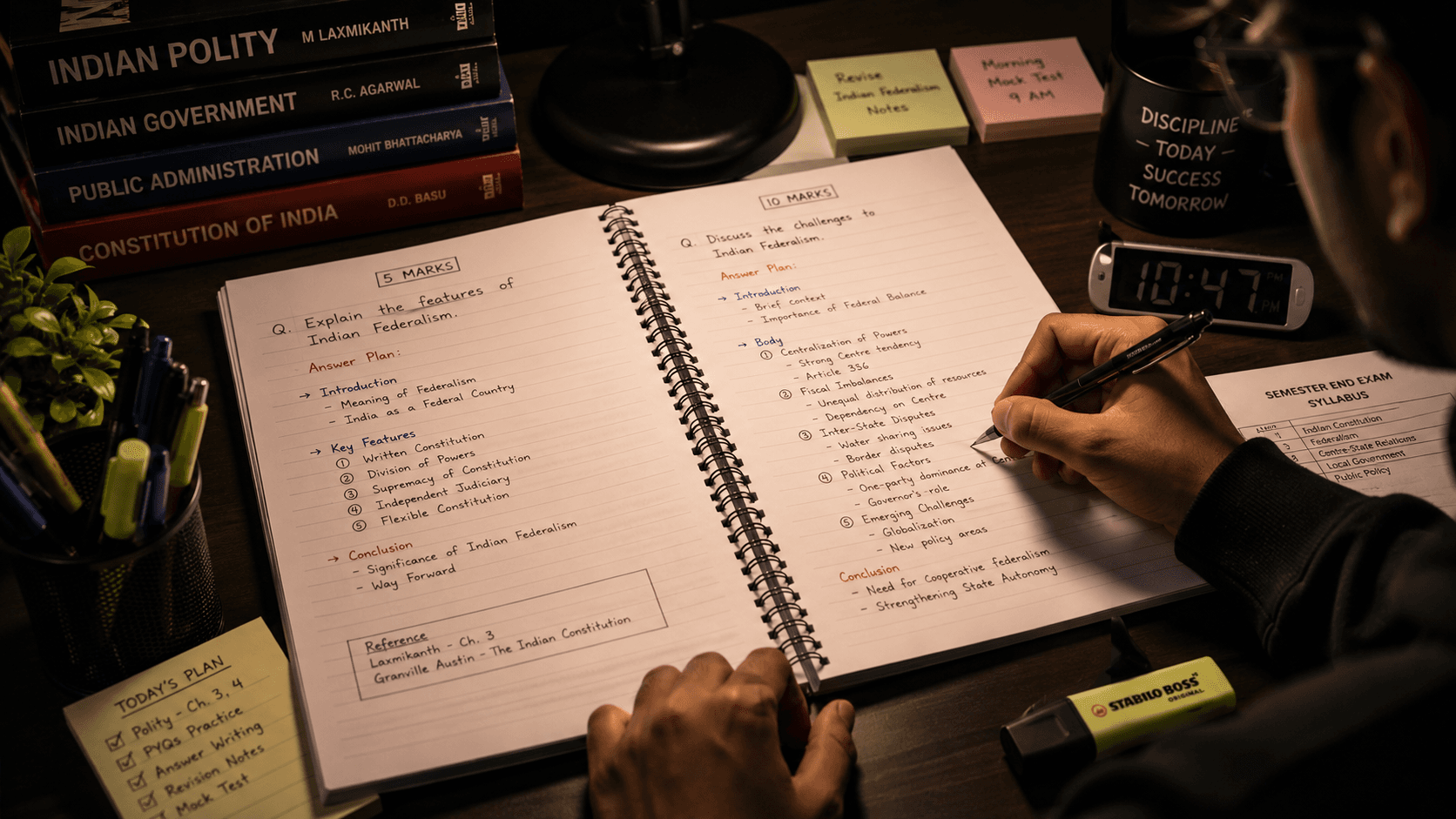
5-Mark vs 10-Mark Questions: How University Students Should Prepare
If you answer 5-mark and 10-mark questions with the same preparation style, you usually lose marks. The answer depth is different, and your revision should reflect that.
Read article